
Really? Why "of course"? Historical?
Test Equipment Anonymous (TEA) : Discussion and Group Therapy Thread
Forum rules
Use tags for the type of equipment your topic is about. Include the "repairs" tag, too, when appropriate. If a new tag is needed, request one in the TEAdministration forum.
Use tags for the type of equipment your topic is about. Include the "repairs" tag, too, when appropriate. If a new tag is needed, request one in the TEAdministration forum.
Re: Test Equipment Anonymous (TEA) : Discussion and Group Therapy Thread

Re: Test Equipment Anonymous (TEA) : Discussion and Group Therapy Thread
Ha same with mine. Quit when someone poured a glass full of used syringes in the sink. Was NOPE and gone.tggzzz wrote: ↑Sun Mar 29, 2026 4:00 pmDaughter's first job was behind the bar at a local Wetherspoons. It financed her "Dad I've just bought a plane ticket to Australia for 6 months" trip, and she learned a lot, e.g. how to "control" sozzled men.
Anyway, nowhere's perfect. Doubly so "deown frm Lundn" places and social services overspill sumps.
These are bookmarked in case I ever go that way...
https://www.thewellingtonmargate.co.uk/
https://www.bottegacaruso.com/
https://www.divemargate.com/
https://www.morellisgelato.com/ Broadstairs, Whistable, Margate, Dubai, Tashkent, Dallas, Philippines, registered office in Finchley Rd. Seriously; seem to be channelling Del Boy.
Excellent - will look into those as well. Tashkent appearing in there is hilarious. No idea why that!
Re: Test Equipment Anonymous (TEA) : Discussion and Group Therapy Thread
Yes, they prioritized the VT stock because tape's less stable than 16mm what with having to bake tapes and all. And 16mm now gets scanned on a request basis, when we do historical review programs.
Re: Test Equipment Anonymous (TEA) : Discussion and Group Therapy Thread
I didn't know videotapes were also afflicted with sticky tape syndrome. In 1978 there was an (internal) BBC Christmas tape "White Powder Christmas" and next year was "Good King Memorex" both commemorating a tape problem.
Re: Test Equipment Anonymous (TEA) : Discussion and Group Therapy Thread
Back to the paper tape and card punch sub-thread...
This video is of minor interest, but it does contain a demo of someone operating a card punch (at about 7:10). It might be useful to show youngsters about the good old days why they've "never had it so good"[1]. Video seems to be from shortly after 1989.
"NASA Computing in the '80's - JPL Building 230"
This video is of minor interest, but it does contain a demo of someone operating a card punch (at about 7:10). It might be useful to show youngsters about the good old days why they've "never had it so good"[1]. Video seems to be from shortly after 1989.
"NASA Computing in the '80's - JPL Building 230"
[1] https://phraseshub.com/youve_never_had_it_so_good
Re: Test Equipment Anonymous (TEA) : Discussion and Group Therapy Thread
In one of the comments the date of the video was pinned down to early 1992.
It looks like a complete mixture of kit of various ages. I got the impression that once systems were set up for a project, they were left running for the life of the project, which could be years for deep space probes. They seem to have a lot of stuff they couldn't bring themselves to throw away and the card punch was part of that.
The last time I used cards was in 1981. By that time the industry was leaving them behind very quickly. I'm sure there were a few hold outs continuing to use them into the 90s. The last I saw that seemed to be in serious use was in the early 90s. It was taped to a package as part of the documentation.
I never had any dealings with paper tape.
It looks like a complete mixture of kit of various ages. I got the impression that once systems were set up for a project, they were left running for the life of the project, which could be years for deep space probes. They seem to have a lot of stuff they couldn't bring themselves to throw away and the card punch was part of that.
The last time I used cards was in 1981. By that time the industry was leaving them behind very quickly. I'm sure there were a few hold outs continuing to use them into the 90s. The last I saw that seemed to be in serious use was in the early 90s. It was taped to a package as part of the documentation.
I never had any dealings with paper tape.
Re: Test Equipment Anonymous (TEA) : Discussion and Group Therapy Thread
That was really interesting - thanks for posting!tggzzz wrote: ↑Tue Mar 31, 2026 8:26 am Back to the paper tape and card punch sub-thread...
This video is of minor interest, but it does contain a demo of someone operating a card punch (at about 7:10). It might be useful to show youngsters about the good old days why they've "never had it so good"[1]. Video seems to be from shortly after 1989.
"NASA Computing in the '80's - JPL Building 230"[1] https://phraseshub.com/youve_never_had_it_so_good
----
Diversions here ... been to Italy with the kids and hanging around with bd140.
Re: Test Equipment Anonymous (TEA) : Discussion and Group Therapy Thread
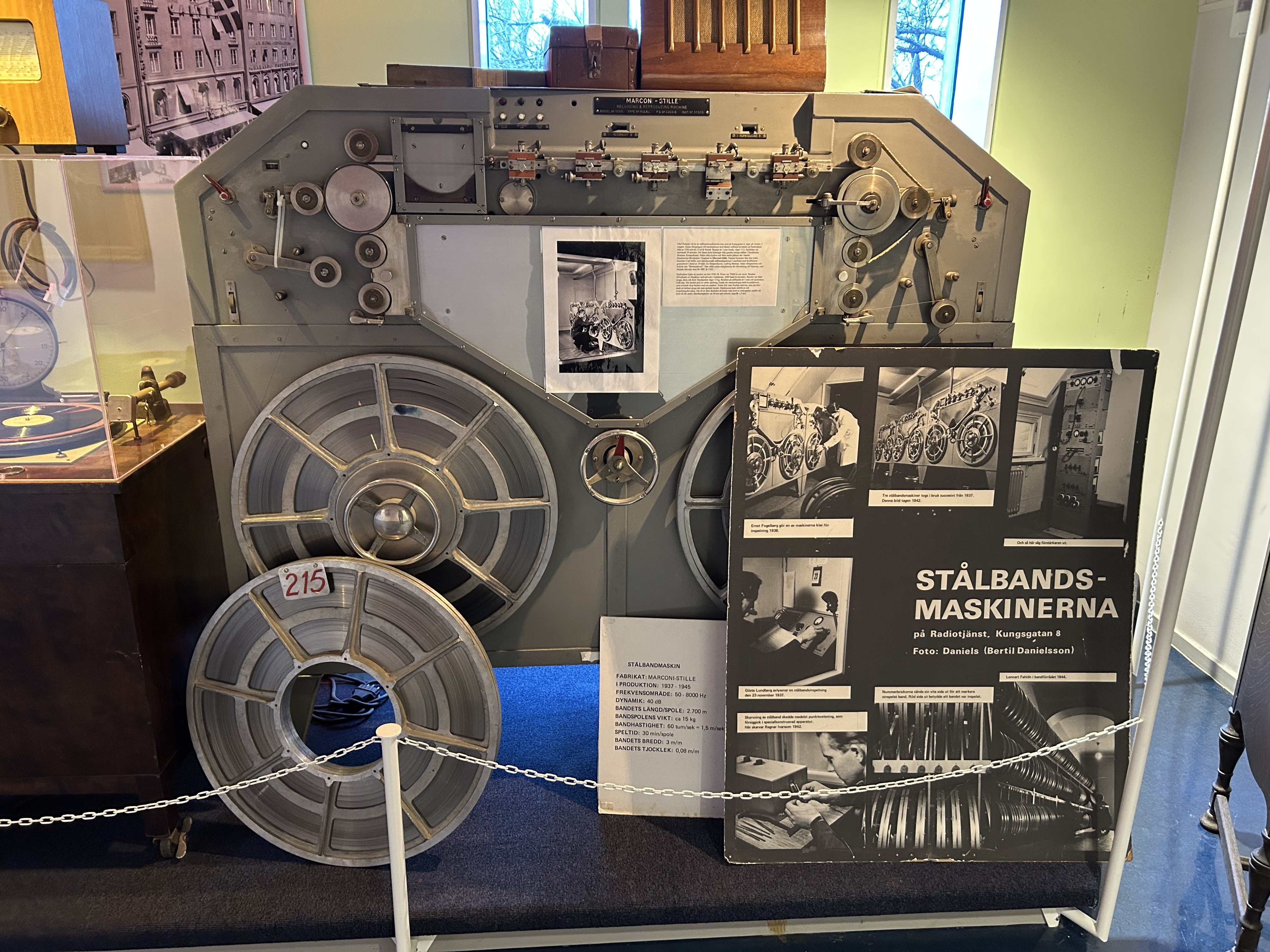
I did a little walkabout in the museum corridor at work, and took some pictures. First, the Marconi-Stille:
Then, the 2" Ampex:
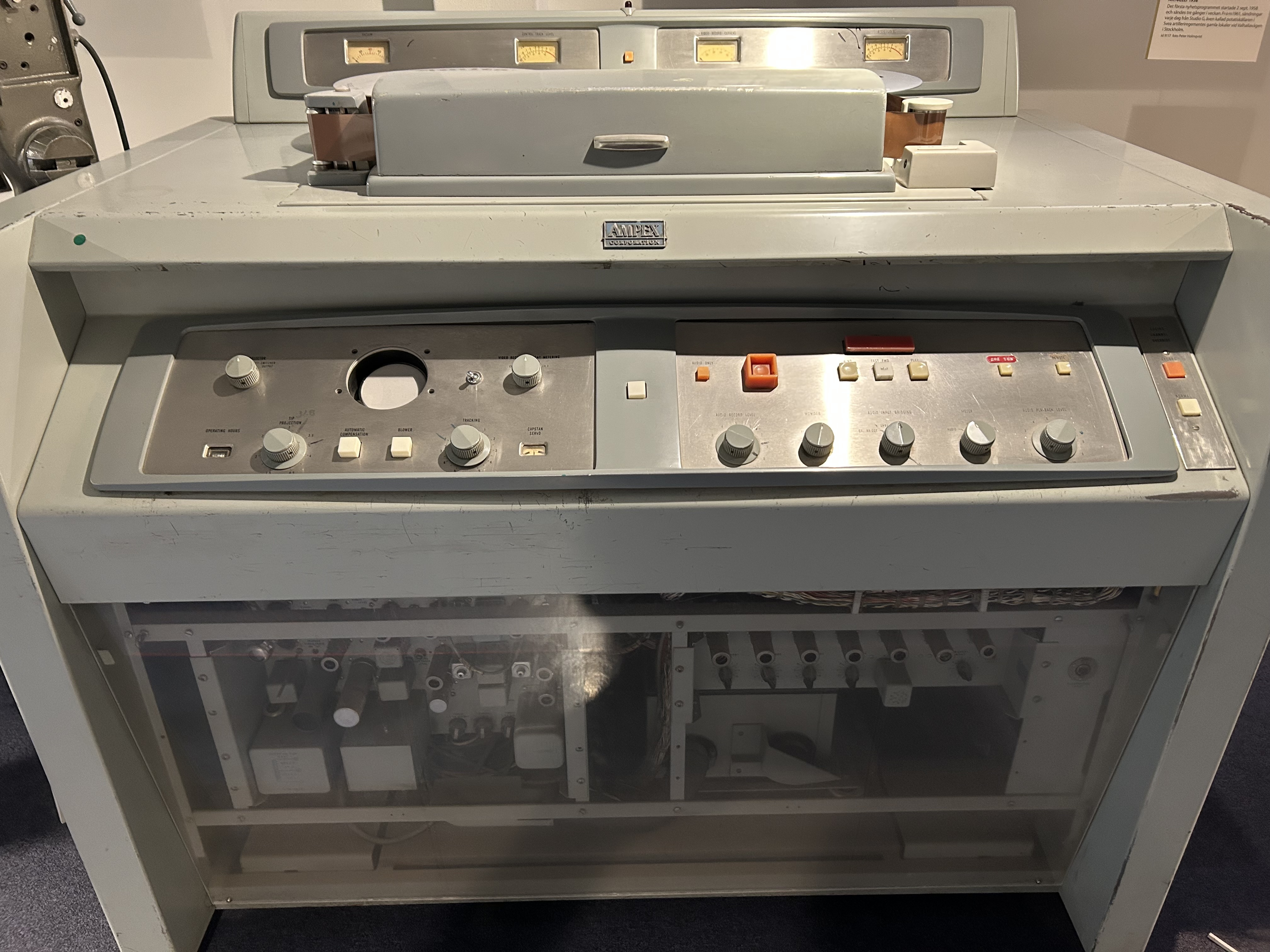
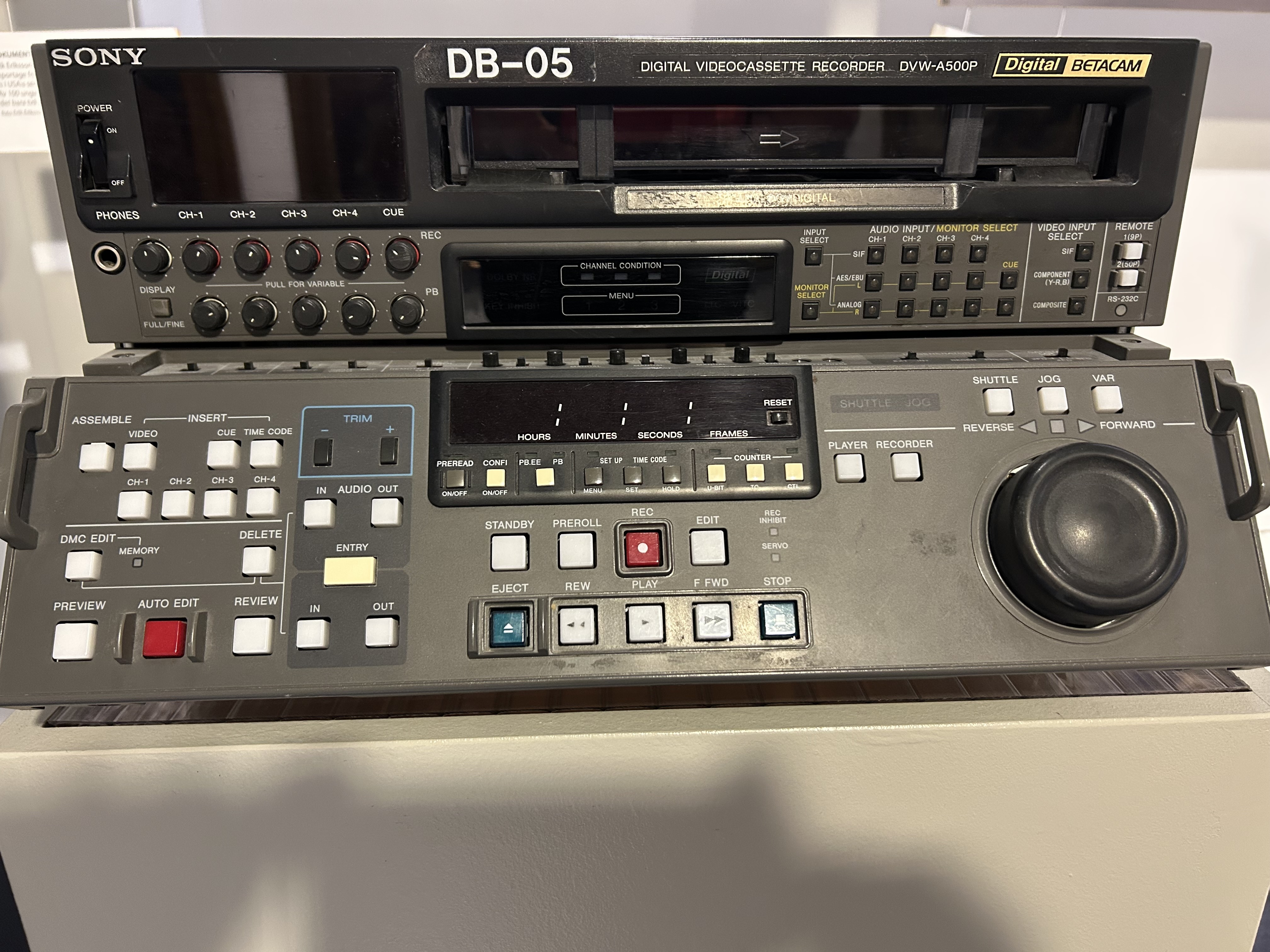
There are a few other VTRen too, a later 2" Ampex, a 1" Bosch, and of course a Sony Digital Betacam one. I remember when those were new; the complete revolution they offered in not having to bother with how many overdubs you did in editing. IIRC some colleagues did a test; they went 200 generations of playback -> record -> playback et c. and could not see a degradation. Coming from the usual Betacam (which in and of itself of course was way, way better than say S-VHS) one sort of had to do this -- to the modern mind ridiculous -- test, just to verify the claims.
For the record, I hate tape. Hard drives are OK, SSD better.

Re: Test Equipment Anonymous (TEA) : Discussion and Group Therapy Thread
Well those turned up and they arn't MUSA. Reversed sex (male on jumper) and small, short, gold plated center contact.Robert wrote: ↑Sun Mar 29, 2026 9:29 am I found some modern MUSA patch bay links on ebay
www.ebay.co.uk/itm/236426841099
They were cheap enough to take a chance to see if they can be used as the basis of adaptors.
 Looks like it may have been designed to use BT43 connector parts.
So I bought a whole patch panel with 6 jumpers. Cost as much as the transformer. Yet to cut one up.
Re: Test Equipment Anonymous (TEA) : Discussion and Group Therapy Thread
Wow! I'd never seen an early quadruplex machine before. Silly, I know, but it had never occurred to me that it would use valves. Now I understand why there was a separate bay for the rest of the electronics.
I can see I will be looking out for MUSA patch panels and their U-links.
I can see I will be looking out for MUSA patch panels and their U-links.

Re: Test Equipment Anonymous (TEA) : Discussion and Group Therapy Thread
The size of the reels is amazing.

An old gray beard with an attitude. I don't bite.....sometimes 
Re: Test Equipment Anonymous (TEA) : Discussion and Group Therapy Thread
My second attempt at buying some MUSA links arrived today. It a complete 2U high panel with two rows of 14 Male to BNC connectors and 6 U links.
https://www.ebay.co.uk/itm/127775315700
Good news is it is MUSA
The links have a plastic "handle" overmoulded. I don't know what the plastic is but it's tough. Softening it with a hot air gun before cutting it off helped but I than found that one of the socket outer tubes had come loose. Turned out the silver plated brass tube had split. Cutting that bar in half revealed that sockets are screwed into the crossbar with thread lock. What's the best way to hold a 9.5mm brass tube to unscrew it without marking it?
Answer: a 10-9 mm ER25 collet chuck as used in my mill. Worked a treat. Now got to determine the thead on the socket. Got a bussy 10 days coming up so it will have to wait.
Robert.
https://www.ebay.co.uk/itm/127775315700
Good news is it is MUSA
The links have a plastic "handle" overmoulded. I don't know what the plastic is but it's tough. Softening it with a hot air gun before cutting it off helped but I than found that one of the socket outer tubes had come loose. Turned out the silver plated brass tube had split. Cutting that bar in half revealed that sockets are screwed into the crossbar with thread lock. What's the best way to hold a 9.5mm brass tube to unscrew it without marking it?
Answer: a 10-9 mm ER25 collet chuck as used in my mill. Worked a treat. Now got to determine the thead on the socket. Got a bussy 10 days coming up so it will have to wait.
Robert.
Re: Test Equipment Anonymous (TEA) : Discussion and Group Therapy Thread
At 15 kilos per reel, the weight is equally amazing. Quite the workout to handle. Also, at 60ips speed, long tapes were needed. The tape was made in country; one of the steel rolling mills in Sweden made a large batch that was then used for the duration of the rather short career, only 6-7 years, of steel tape at "Radiotjänst" ("The Radio Service") which was the company name back then. As soon as wire recorders and more importantly plastique tape had entered the realm of the possible, radio companies switched over as soon as possible.
Re: Test Equipment Anonymous (TEA) : Discussion and Group Therapy Thread
Perzackly. And a 3/8" collet would have been even better. (Because of that, I have a few Imperial ER32 sizes as well). I frequently use an ER32 chuck to firmly grip delicate stuff without damaging it. I remember colour coded U-links. We used them on RGB bays, but a more sensible way to distribute component colour was YUV, although I don't recall seeing any U-links in U (R-Y) or V (B-Y). Audio digits were purple and that has hung over in purple AES3 XLR to XLR. Do let us know what the thread is; it might turn out to be useful in the future. I'm guessing it might be UNEF (UNified Extra Fine). It's a very popular thread in electronics.
Perhaps mansaxel could wave a micrometer at some of that "tape" some time. I've never used one, but I understand that you can fit a "knife" blade to a bandsaw. At 60 ips, one of those tape machines was a bandsaw.
Perhaps mansaxel could wave a micrometer at some of that "tape" some time. I've never used one, but I understand that you can fit a "knife" blade to a bandsaw. At 60 ips, one of those tape machines was a bandsaw.
Re: Test Equipment Anonymous (TEA) : Discussion and Group Therapy Thread
An ER 35 will not fit between the legs of the U link. I do have some imperial collets but the 10-9mm was already in the chuck...
It does make the job easy. One of the many advantages of having a small mill and lathe.
Well two or three lathes in my case. I just bought another Pultra clockmakers lathe. I picked up a mongerel one (1750 headstock on P type bed) at Dunstable Downs rally year before last. It came with a few bits but no compound slide. Bargain price though. I then bought a proper 1750 bed, base and some slide parts. I haven't got around to swapping it yet. Then last month a 1750 popped up on ebay with a nice compound slide on it. Thelathe was painted in green hammer finish and I didn't look past that. It wasn't too far away so I made an offer on it that was accepted
  Also got a JL70 spin indexer with the "stevenson" modification to take ER35 collets as well as 5C.
When I piscked it up I realised that:
A/ The lathe was in perfect condition (apart from the colour)
B/ The seller was the owner of Smart & Brown who made the Pultra. That one is a keeper. Anyone want a Pulta 1750 "project"?
It does make the job easy. One of the many advantages of having a small mill and lathe.
Well two or three lathes in my case. I just bought another Pultra clockmakers lathe. I picked up a mongerel one (1750 headstock on P type bed) at Dunstable Downs rally year before last. It came with a few bits but no compound slide. Bargain price though. I then bought a proper 1750 bed, base and some slide parts. I haven't got around to swapping it yet. Then last month a 1750 popped up on ebay with a nice compound slide on it. Thelathe was painted in green hammer finish
and I didn't look past that. It wasn't too far away so I made an offer on it that was accepted Also got a JL70 spin indexer with the "stevenson" modification to take ER35 collets as well as 5C.When I piscked it up I realised that:
A/ The lathe was in perfect condition (apart from the colour)
B/ The seller was the owner of Smart & Brown who made the Pultra. That one is a keeper. Anyone want a Pulta 1750 "project"?
You do not have the required permissions to view the files attached to this post.
Re: Test Equipment Anonymous (TEA) : Discussion and Group Therapy Thread
Ah! Finally, a justification for ER25 over ER32. I dithered for ages before finally choosing ER32 as my collets. Then ER40 appeared, so I bought a face plate chuck for the Bantam and the collet sizes above ER32 sizes. Then I made an ER11 face plate chuck for the Hobbymat and fitted an ER11 chuck to my tapping fixture. But I needed to tap some M10 accurately, so I made another tapping head and fitted it with an ER20 chuck and collets above the ER11 sizes.
There was a Pultra on the Homeworkshop site. Is that the one you bought? I eyed it up but whilst two lathes are useful (one can improve the other), I don't have a need for three, although I looked seriously at a Lorch a while ago because it uses the same collets as my BCA3 mill. In the end, I decided I'd rather stick with my Hobbymat because I know exactly what has happened to it since it was new. The Lorch was not being sold my someone who had used it for years, and that matters.
Re: Test Equipment Anonymous (TEA) : Discussion and Group Therapy Thread
If you have a hobbymat you probably don't need a Pultra. My Mill is a Sieg SX2LP. It's small with fairly high spindle speed an a long X travel so ideal for light alloys, plastic and front panels. The ER25 collet suits it for most things. I also have a ER 16 set for tight spaces and if I need every bit of headroom. The ER 32 (just realised I said 35 in previous post, now corrected) is currently just for the spin indexer but I might get a backplate for the lathe.
I agree on long previous ownership. My ML7 is an early one but I'm only the 3rd or possibly forth owner. Previous guy had it over 20 years. Came with all the bits and even the orginal sales booklet. Properly looked after not just a glossy paint job. Having put a 6 pole 3 phase motor and VFD on it has transformed it in terms of noise and vibration and also negates the lack of a clutch. I've got an Electronic Leadscrew kit for it but haven't fitted it yet. That will make thread cutting really simple.
Robert.
I agree on long previous ownership. My ML7 is an early one but I'm only the 3rd or possibly forth owner. Previous guy had it over 20 years. Came with all the bits and even the orginal sales booklet. Properly looked after not just a glossy paint job. Having put a 6 pole 3 phase motor and VFD on it has transformed it in terms of noise and vibration and also negates the lack of a clutch. I've got an Electronic Leadscrew kit for it but haven't fitted it yet. That will make thread cutting really simple.
Robert.
Last edited by Robert on Sat Apr 11, 2026 11:15 am, edited 1 time in total.
Re: Test Equipment Anonymous (TEA) : Discussion and Group Therapy Thread
0,08mm thick by 3mm wide, 2700 meters per spool which gave 30 minutes playing time.
Re: Test Equipment Anonymous (TEA) : Discussion and Group Therapy Thread
Yes, there are a lot of those around these days. To anyone wondering about a second-hand lathe, look for it to come with accessories (especially quick change tool post and lots of holders), but without fresh paint. The other kind of lathe that turns up often is grandad's lathe that has been allowed to go rusty. It's amazing how people who are totally impractical think that, "It's just a bit of rust and will clean off." Lathes like to be used...
I really have got to try that...
Re: Test Equipment Anonymous (TEA) : Discussion and Group Therapy Thread
We are going a bit off TEA but yes, go for a VFD. I went for the slower 6 pole motor because generally you get less power loss using the VFD to increase speed than reduing it. And it's even smoother. I knew the reduced troqure ripple would make difference to the vibration but was shocked very surprised how much the improvement was.
Robert.
Robert.
Re: Test Equipment Anonymous (TEA) : Discussion and Group Therapy Thread
Not straying off the subject at all; making, fixing, or modifying test equipment is so much easier if a lathe is available. A bunch of insulating pillars in my Fluke 341A voltage calibrator had crumbled due to the long-term stress of having knurled brass threaded inserts in them. I made new Perspex inserts and cut the threads directly into the Perspex. (If you do that, you need to use a slightly oversize tapping drill because the drilled hole will be smaller than the drill that made it.)Robert wrote: ↑Sat Apr 11, 2026 5:38 pm We are going a bit off TEA but yes, go for a VFD. I went for the slower 6 pole motor because generally you get less power loss using the VFD to increase speed than reducing it. And it's even smoother. I knew the reduced torque ripple would make difference to the vibration but was shocked very surprised how much the improvement was.
I'm not so sure that a six pole motor has less torque ripple than a three. The inertia of the the flywheel is proportional to angular velocity squared so the three pole motor running at twice the speed has a flywheel/rotor that is four times as effective. I know people have achieved better finish on mills by fitting a flywheel to achieve smoother rotation and cutting. But I do take your point about increasing vs decreasing speed.
Re: Test Equipment Anonymous (TEA) : Discussion and Group Therapy Thread
More poles on an electric motor = more torque and less RPM.
My Harrison 12 lathe came fitted with a 3HP 3 Ph motor wired for 2 or 4 pole operation.
Normal operation is 4 pole = 1440 RPM and 2 pole is 2880 RPM or thereabouts on a 50 Hz supply.
(6 pole is ~960 and 8 pole ~720 RPM in other 3ph motors I have crossed paths with)
A sliding coupler switch changes operation between 2 and 4 pole operation and this should be done with the motor stopped although I will shift to the higher speed 2 pole operation when the clutch is disengaged and the motor is under no load.
The lowest lever on the cabinet is the 2 speed and reverser in the 2nd image.
As well as the 2 speed motor a set of back gears can be used to find the best turning speed for the job at hand.
I rarely change the gearbox and instead use the 2 motor speeds available and the back gears that when using all offer 4 quite different speeds. Orange speeds indicate high speed motor selection.
My Harrison 12 lathe came fitted with a 3HP 3 Ph motor wired for 2 or 4 pole operation.
Normal operation is 4 pole = 1440 RPM and 2 pole is 2880 RPM or thereabouts on a 50 Hz supply.
(6 pole is ~960 and 8 pole ~720 RPM in other 3ph motors I have crossed paths with)
A sliding coupler switch changes operation between 2 and 4 pole operation and this should be done with the motor stopped although I will shift to the higher speed 2 pole operation when the clutch is disengaged and the motor is under no load.
The lowest lever on the cabinet is the 2 speed and reverser in the 2nd image.
As well as the 2 speed motor a set of back gears can be used to find the best turning speed for the job at hand.
I rarely change the gearbox and instead use the 2 motor speeds available and the back gears that when using all offer 4 quite different speeds. Orange speeds indicate high speed motor selection.
You do not have the required permissions to view the files attached to this post.
Siglent Distributor NZ, TE Enabler
Re: Test Equipment Anonymous (TEA) : Discussion and Group Therapy Thread
One point I was trying to make was that most people adding a VFD to a lathe only consider using it to reduce the motor speed rather than increasing it. Even without a "special" motor or even full data on an existing motor, those of us in the UK and other countries with 50Hz mains can get a 20% increase by running at 60Hz. The 6 pole (~950 RPM ) I bought uses the same housing, bearings and fan as the 4 pole model so on the face of it can run at 4 pole speeds (~1750 RPM). And checing the detailed data confirms this. You will loose a bit of torque because the VFD has less voltage headroom to overcome the higher back EMF and drive the required current. But you don't loose any power. If you reduce speed you lose power proportionally to the speed reduction unless you increase the torque. Thats just physics. You can't recover this by increasing the current (torque) due to I2R heating. It seems a no-brainer to me but most model engineers seem to have troble seeing it and keep the same speed when replacing motors and adding a VFD.
Robert.
Robert.
Re: Test Equipment Anonymous (TEA) : Discussion and Group Therapy Thread
That Harrison is very similar to my Bantam except for the screwcutting gearbox. The Bantam has a big three-phase plug on it that goes to a fixed inverter (same with BCA3 mill).
Yes, happy with the torque/power argument. The Hobbymat usually runs at its maximum speed of 2000 rpm because it mostly does small work. Shortly after I bought it, I fitted the slow speed attachment that gives it two lower speeds in addition to its standard (2000, 1000, 500, 250) but I've hardly ever used it. A few months ago, I made a handle for cranking the head stock by hand. I've used it for threadcutting and it was thoroughly worth the effort. Far more controllable and no danger of running on. As I see it, the advantage of changing a single phase motor to three phase is reduced torque ripple from the motor. Going for a VFD allows minor changes in speed that might just avoid a chatter frequency.
Going back to test equipment (which is what the workshop supports), I recently completed a low noise high voltage regulator. Rotary switch selects between 180V, 240V, 300V, 360V, and 420V (roughly). The three (capped) BNCs are: Input, Output, 10k temperature sensor. Toggle switch selects between 10mA and 30mA FSD on the meter. Tin came from Sainsbury's. The spreadsheet compares its noise with three other supplies all set to the same voltage.
Yes, happy with the torque/power argument. The Hobbymat usually runs at its maximum speed of 2000 rpm because it mostly does small work. Shortly after I bought it, I fitted the slow speed attachment that gives it two lower speeds in addition to its standard (2000, 1000, 500, 250) but I've hardly ever used it. A few months ago, I made a handle for cranking the head stock by hand. I've used it for threadcutting and it was thoroughly worth the effort. Far more controllable and no danger of running on. As I see it, the advantage of changing a single phase motor to three phase is reduced torque ripple from the motor. Going for a VFD allows minor changes in speed that might just avoid a chatter frequency.
Going back to test equipment (which is what the workshop supports), I recently completed a low noise high voltage regulator. Rotary switch selects between 180V, 240V, 300V, 360V, and 420V (roughly). The three (capped) BNCs are: Input, Output, 10k temperature sensor. Toggle switch selects between 10mA and 30mA FSD on the meter. Tin came from Sainsbury's. The spreadsheet compares its noise with three other supplies all set to the same voltage.
You do not have the required permissions to view the files attached to this post.
Re: Test Equipment Anonymous (TEA) : Discussion and Group Therapy Thread
Sure but with a lathe with a properly adjusted clutch/brake you can stop rotation almost instantly especially when thread cutting at low RPM. The 45 or 65 RPM speeds are perfect for threading IME.EC8010 wrote: ↑Sun Apr 12, 2026 8:10 am That Harrison is very similar to my Bantam except for the screwcutting gearbox. The Bantam has a big three-phase plug on it that goes to a fixed inverter (same with BCA3 mill).
Yes, happy with the torque/power argument. The Hobbymat usually runs at its maximum speed of 2000 rpm because it mostly does small work. Shortly after I bought it, I fitted the slow speed attachment that gives it two lower speeds in addition to its standard (2000, 1000, 500, 250) but I've hardly ever used it. A few months ago, I made a handle for cranking the head stock by hand. I've used it for threadcutting and it was thoroughly worth the effort. Far more controllable and no danger of running on. As I see it, the advantage of changing a single phase motor to three phase is reduced torque ripple from the motor. Going for a VFD allows minor changes in speed that might just avoid a chatter frequency.
Going back to test equipment (which is what the workshop supports), I recently completed a low noise high voltage regulator. Rotary switch selects between 180V, 240V, 300V, 360V, and 420V (roughly). The three (capped) BNCs are: Input, Output, 10k temperature sensor. Toggle switch selects between 10mA and 30mA FSD on the meter. Tin came from Sainsbury's. The spreadsheet compares its noise with three other supplies all set to the same voltage.
I normally turn a narrow relief to thread into with a narrow parting off tool down to a few thou below the minor thread diameter.
Siglent Distributor NZ, TE Enabler